
New Jersey Cinderella License Hours — New Jersey
Free to compare
The Midnight Rule No One Explains Clearly
You received your New Jersey Conditional License—the Cinderella License—and the approval letter says you must be home by midnight. Your shift ends at 11:30pm and it takes 25 minutes to drive home. You're not sure if that violates the restriction because the MVC documentation never clarifies whether 'midnight' is when you leave work, when you arrive home, or when your trip must be complete.
New Jersey's midnight restriction is a home-arrival deadline, not a driving prohibition. You must arrive at your residence by 12:00am. Trips that start before midnight but finish after midnight violate the conditional license terms, triggering automatic revocation for most drivers who discover this only after their first enforcement contact.
“Trips starting before midnight that finish after violate the conditional license—no in-transit exemption exists, and most drivers learn this after their first enforcement contact.”

Find Coverage for a Probationary License
Get My Probationary License Insurance Quote12:00am arrival
NJ Conditional License Curfew
New Jersey MVC conditional license orders impose a midnight home-arrival deadline. The restriction applies to all approved-purpose trips—work, education, medical treatment, and essential household errands—and is measured by arrival time at your legal residence, not departure time from your destination.
New Jersey Motor Vehicle Commission conditional license operational guidance
What the Midnight Restriction Actually Covers
The Cinderella License midnight rule applies to every trip you take under conditional license authority. Work trips, school trips, medical appointments, and approved household errands must all complete with you arriving home before 12:00am. The restriction is not limited to recreational driving or discretionary trips—it governs all movement.
Approved purposes under New Jersey's conditional license program include employment, education, medical treatment, and essential household needs such as grocery shopping or dependent care. Every trip for these purposes must originate from your residence and return to your residence before midnight. Multi-stop trips are permitted as long as each stop serves an approved purpose and the final return leg completes before 12:00am.
The MVC does not publish a grace period or allowance for traffic delays. If your route planning assumes arrival at 11:58pm and you hit unexpected congestion, the two-minute delay past midnight constitutes a violation. Most conditional drivers learn this only after a traffic stop produces a revocation notice.
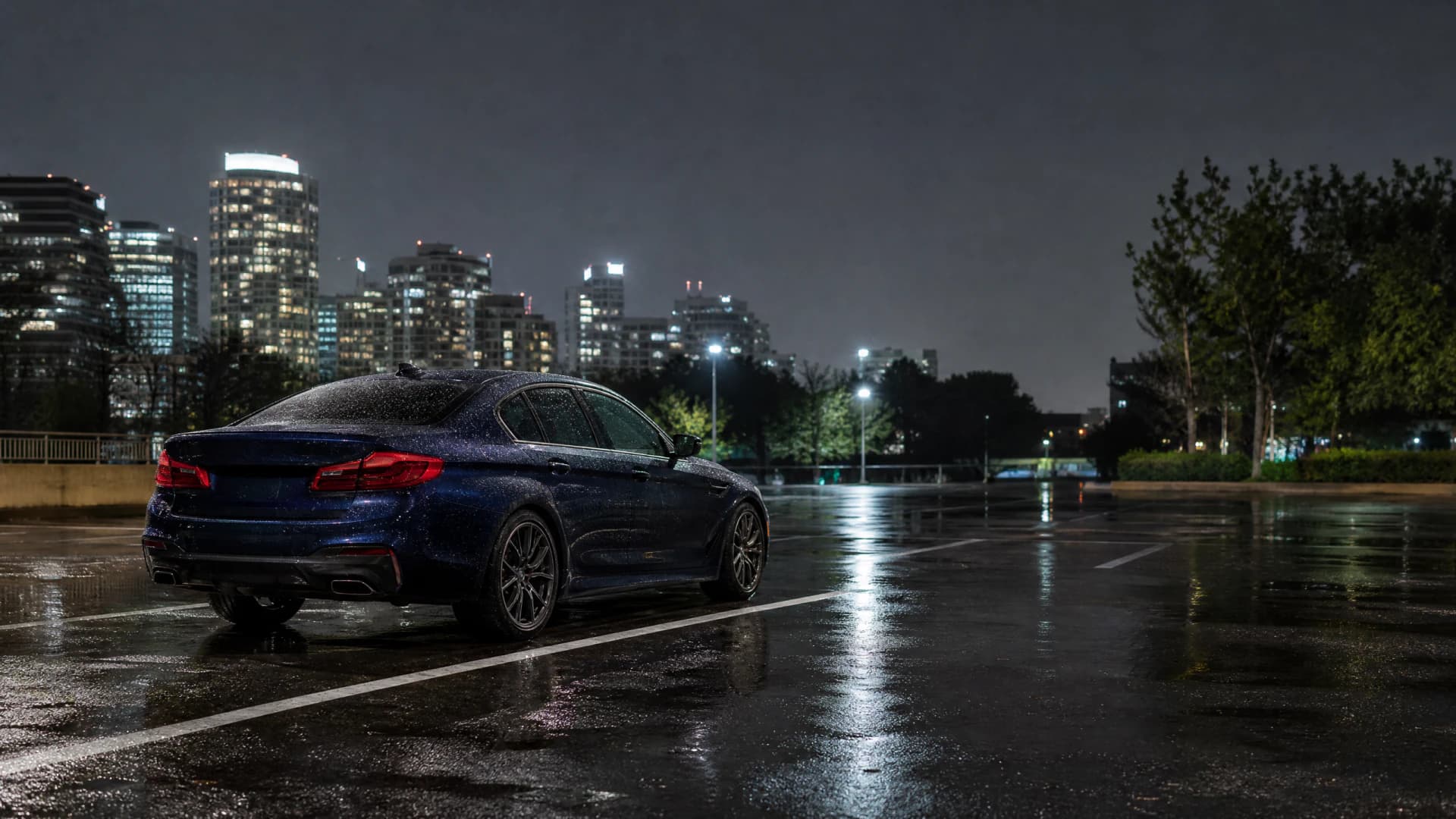
Trips starting before midnight that finish after midnight violate the conditional license—there is no in-transit exemption, and most drivers discover this rule only after enforcement contact triggers revocation.





What Happens When You Miss Midnight
A single midnight-curfew violation detected by law enforcement typically triggers an MVC administrative review. The officer files a conditional license violation report with the MVC, and the MVC sends you a notice scheduling a revocation hearing within 30 days. At the hearing, you present evidence explaining the violation—traffic incident documentation, employment records showing an unexpected schedule change, medical emergency proof—but the MVC adjudicator has discretion to revoke your conditional license even for a first violation.
Most conditional drivers facing midnight-violation revocation lose their conditional license for the remainder of the original suspension period. If your underlying DUI suspension was three years and you're 18 months into that period with a conditional license, a revocation puts you back to fully suspended status for the remaining 18 months with no second conditional license application permitted under standard MVC policy.
The cost of midnight-curfew revocation compounds quickly. You lose the conditional license, your ignition interlock device lease continues accruing monthly charges while you cannot drive, and your SR-22-equivalent insurance coverage—structured as direct carrier certification through the MVC surcharge system—remains in force and billed for the full three-year period regardless of whether you hold driving privileges.
$1,000–$3,000/year
NJ DUI Surcharge Duration
New Jersey imposes annual DMV surcharges for three years following DUI conviction, separate from the conditional license program. Surcharges continue accruing whether or not you hold conditional driving privileges, and must be paid in full before final license reinstatement.
New Jersey Surcharge Violation System operational rules

The Insurance Layer Most Conditional Drivers Miss
New Jersey does not use SR-22 certificates. Instead, your insurer files direct certification with the MVC confirming you carry the state-required liability minimums: $15,000 per person bodily injury, $30,000 per accident bodily injury, $5,000 property damage, plus mandatory PIP and uninsured motorist coverage. This certification runs parallel to the three-year surcharge period, and your carrier must maintain active filing status throughout the conditional license term and the full underlying suspension period.
Conditional license holders shopping for lower premiums face a structural trap: switching carriers mid-suspension requires your new carrier to file updated MVC certification before your old carrier cancels. A gap of even one day between carrier certifications triggers automatic MVC suspension of your conditional license and your vehicle registration. Most drivers switching carriers don't coordinate the handoff timing and lose their conditional license to an administrative lapse they never intended.
Plan Your Next Move Around the Midnight Constraint
Calculate your actual schedule against the midnight deadline right now. If your current work shift, school schedule, or regular medical appointment pattern puts you at risk of post-midnight arrival even once, contact your employer or program coordinator today to request an earlier shift or appointment block. New Jersey MVC conditional license adjudicators do not accept 'my employer required the late shift' as a defense—the conditional license places the compliance burden on you, not your employer.
If your schedule cannot accommodate the midnight restriction, evaluate whether a non-owner SR-22-equivalent policy paired with rideshare or public transit for late trips costs less than the conditional license revocation risk. Conditional license applications in New Jersey require proof of employment or vocational need, but the MVC does not mandate that you drive yourself—documented rideshare receipts or employer-provided transit can satisfy the 'essential travel' showing without exposing you to midnight-violation liability.
How to Structure Your Driving Schedule
Calculate your longest regular commute time and add 15 minutes for unexpected delays. If your drive home from work takes 25 minutes under normal conditions, plan to leave work by 11:20pm to preserve a 40-minute buffer. New Jersey law enforcement does not accept traffic congestion, weather delays, or vehicle trouble as defenses to post-midnight arrival—your conditional license order is strict liability.
Document your route planning. Keep a written log showing your typical departure times, actual arrival times, and any pattern of consistent buffer time. If you face a violation allegation, the log provides contemporaneous evidence that you structured your schedule to comply. New Jersey MVC revocation hearings do consider documented compliance efforts when evaluating whether a single violation warrants full conditional license termination.
Get Your Free Quote
Get My Probationary License Insurance QuoteFrequently Asked Questions
Can I drive after midnight with a New Jersey Cinderella License for work?
No. New Jersey's Conditional License midnight restriction requires you to arrive home by 12:00am regardless of trip purpose. Work trips, school trips, and medical trips must all complete before midnight. There is no employment exemption to the curfew.
What happens if I arrive home at 12:05am with a Cinderella License?
A post-midnight arrival detected by law enforcement triggers an MVC administrative review and typically results in a revocation hearing within 30 days. The MVC has discretion to revoke your conditional license for a single violation, returning you to fully suspended status for the remainder of your original suspension period.
Does New Jersey Cinderella License let me drive to multiple stops before midnight?
Yes, if every stop serves an approved purpose—work, school, medical treatment, or essential household errands—and your final arrival home occurs before 12:00am. Multi-stop trips are permitted as long as the entire route completes before midnight.
Can I get a grace period for traffic delays with a Cinderella License?
No. New Jersey MVC conditional license restrictions are strict liability. Traffic congestion, weather delays, and vehicle trouble are not recognized defenses to post-midnight arrival. You must plan buffer time into every trip to account for unexpected delays.
Do I need SR-22 insurance for a New Jersey Conditional License?
New Jersey does not use SR-22 certificates. Your insurer files direct certification with the MVC confirming you carry required liability, PIP, and uninsured motorist coverage. This certification must remain active throughout your conditional license term and the full three-year surcharge period.
How long does the midnight restriction last on a New Jersey Cinderella License?
The midnight restriction applies for the full duration of your conditional license, which typically runs until your underlying suspension period ends. For a three-year DUI suspension, the curfew applies for the entire three years unless the MVC modifies your conditional license terms.
Can I lose my Cinderella License for one midnight curfew violation?
Yes. The MVC has discretion to revoke your conditional license after a single midnight-curfew violation. Most revocations return you to fully suspended status for the remainder of your original suspension period with no second conditional license application permitted under standard policy.